History
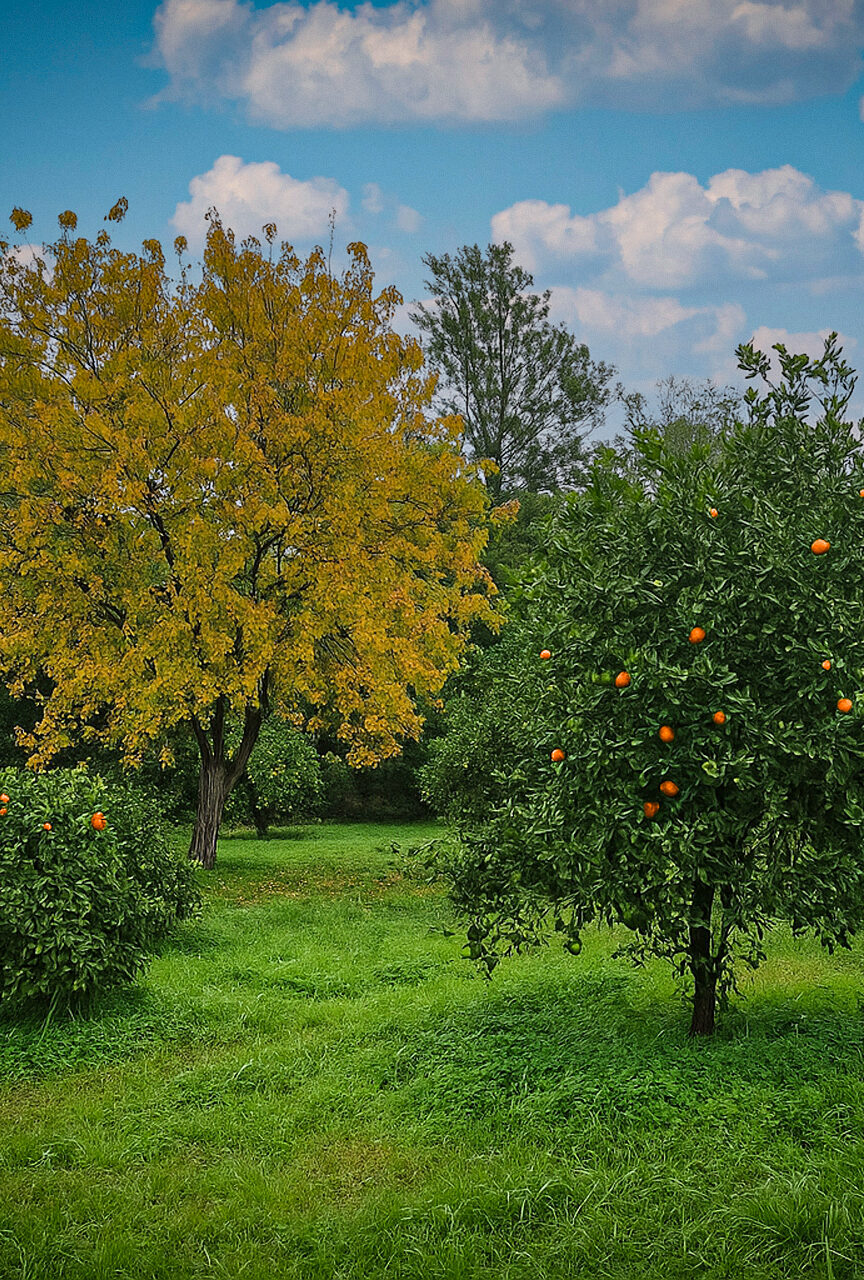
At “the southern entrance of Milis, among fragrant citrus groves and stone streets, stands Villa Pernis Vacca: a noble residence that encompasses over a century of history, vision, and transformation. Built around 1905, it is the result of the” ambition of Benvenuto Pernis, a cultured and forward-thinking entrepreneur, who chose this fertile corner of Sardinia to bring to life an avant-garde agricultural and residential project.
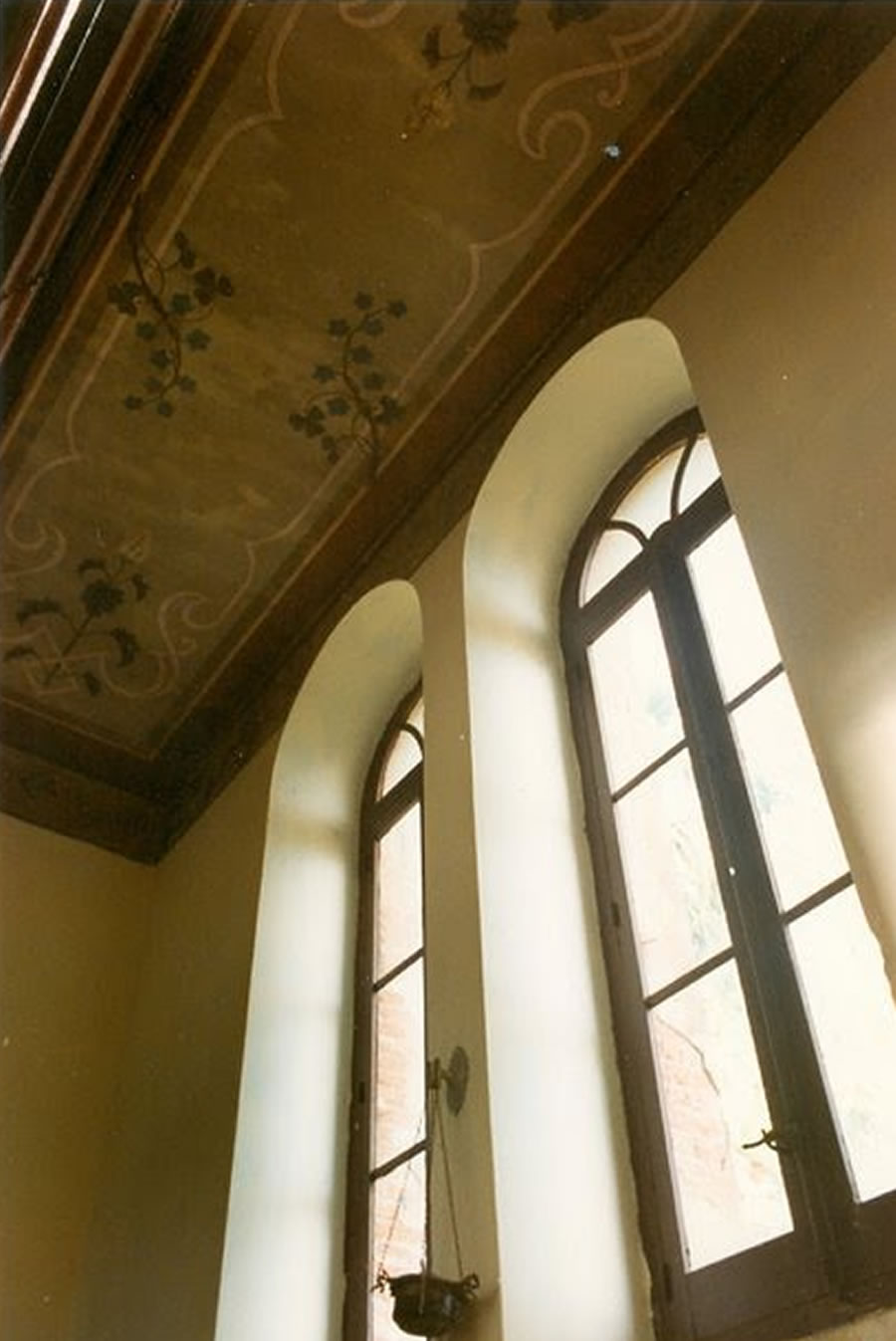
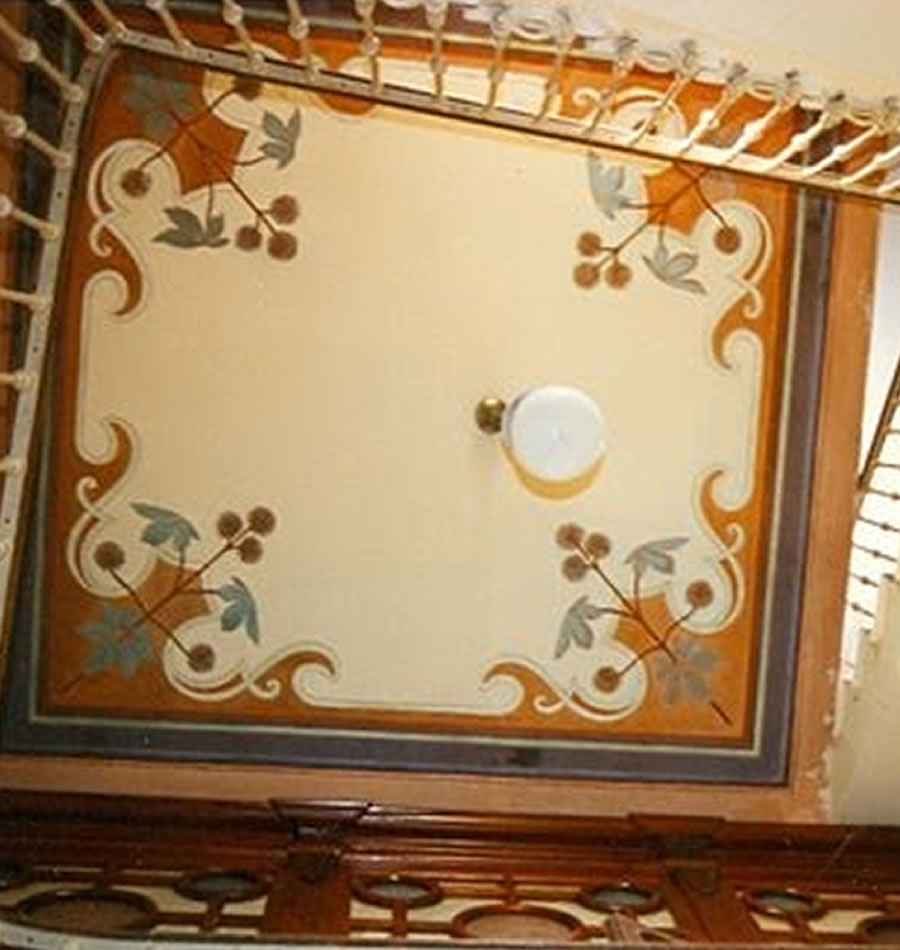
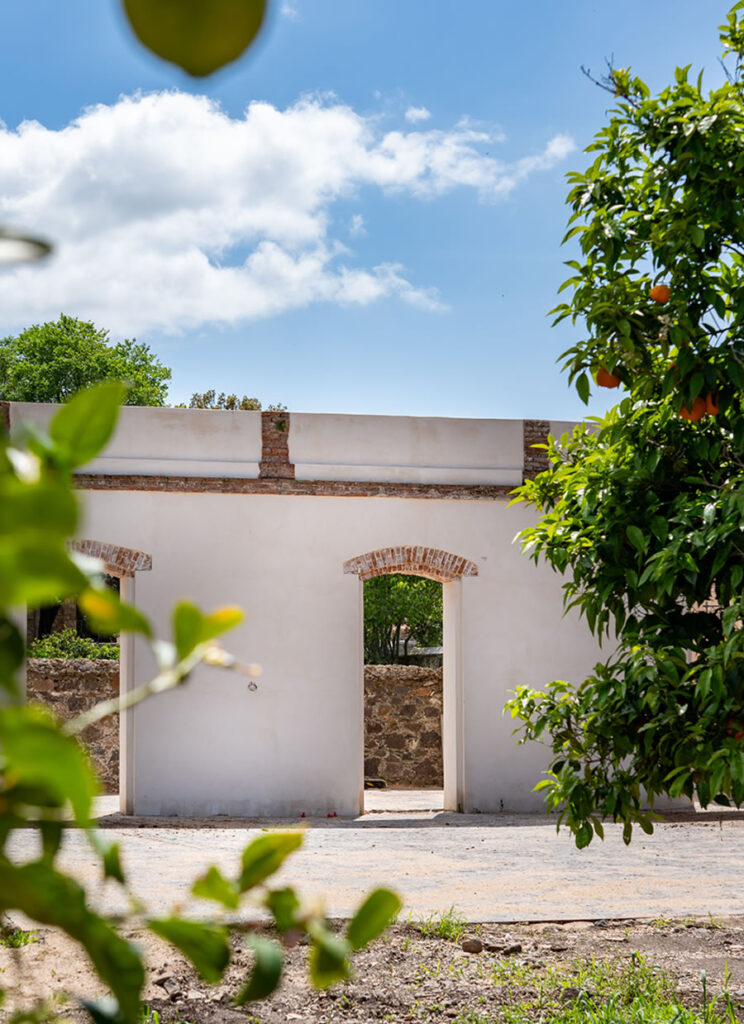
Surrounded by four hectares of greenery, the villa features elegant forms inspired by the Liberty style: soft lines, cast iron and concrete details, floral decorations, and frescoes that adorn the interiors with grace and modernity. The “building is developed in an ‘L’-shape, with a long side of 120 meters, and reflects a harmonious balance between productive functionality and residential beauty. The complex is articulated into a main body and service areas, once stables and staff quarters, now precious testimonies of an” era of transformation.
After the initial phase dedicated to breeding horses for the royal army, the estate was purchased in the 1930s by Cosimo Vacca, an expert farmer, who converted the riding area into a lush citrus grove, still the productive heart of the property today.
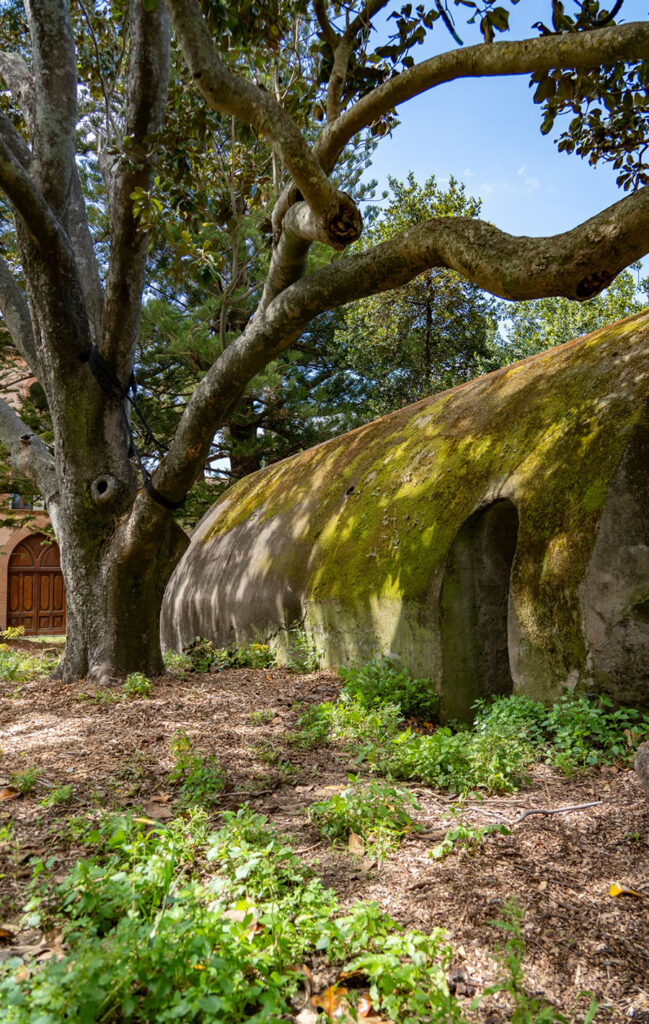
Throughout the 20th century, the villa underwent new changes: during World War II, it was requisitioned by the Aviation command, becoming a military headquarters and hosting an air-raid shelter still visible in the garden. After years of abandonment, it was acquired by the Autonomous Region of Sardinia and, in 2000, by the Municipality of Milis, which began its restoration.
Today, Villa Pernis Vacca opens to the public as a space of culture, memory, and identity. A living place that continues to tell its story, intertwining nature, architecture, and beauty.
Families
Villa Pernis Vacca is not just an architectural and landscape site, but also the “meeting point between two families who, in different eras, have left a” deep mark on the economic, social, and cultural history of Sardinia: the Pernis and the Vacca families.
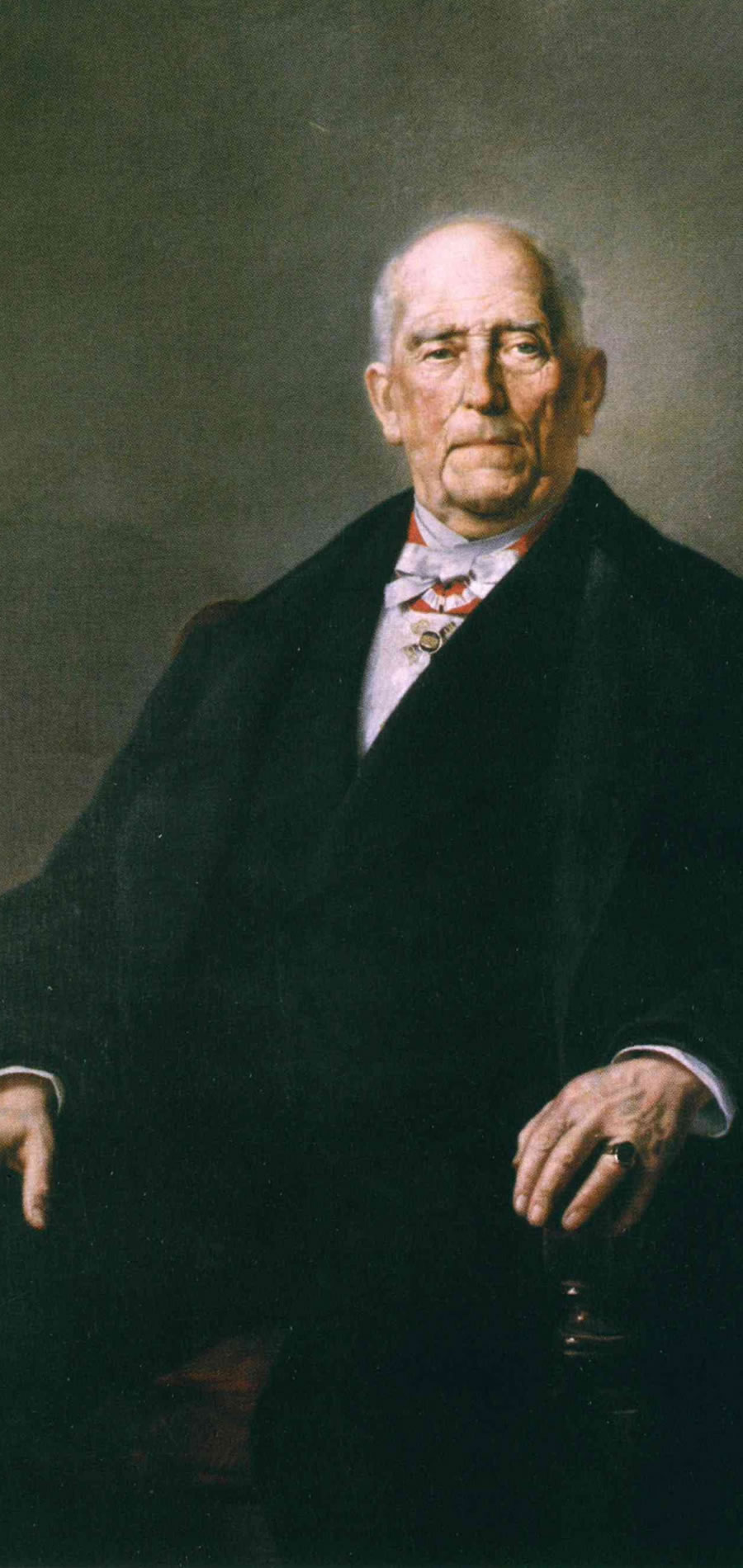
It all began with Josias Pernis (1797-1985), a Swiss merchant who arrived in Sardinia by chance after a shipwreck off the coast of Santa Caterina di Pittinuri. From that moment, his life took a new direction: he settled in Cagliari, started a thriving wine trade business, married Caterina Sesselego Pastorino, and contributed to the foundation of Banco di Sardegna. His tomb, in the Pernis Chapel of the Bonaria Monumental Cemetery, is a work of art sculpted by Giuseppe Maria Sartorio.
His son Guglielmo followed in his footsteps, consolidating the family’s prestige in the entrepreneurial fabric of Cagliari. But it was Benvenuto, Josias’s grandson, who carried the vision beyond the city limits. At the beginning of the 20th century, he chose Milis to create a modern agricultural business, centered on horse breeding and a residence that would also be a symbol of elegance and innovation: Villa Pernis Vacca.
In 1926, the property passed into the hands of Cosimo Vacca, belonging to one of the oldest families in Milis. An expert farmer, he transformed the estate into a productive citrus grove, marking the “beginning of a new phase in the life of the villa. The bond between the Vacca family and the land has always been strong: noble roots, connections with the Boyl family, and a” cultural heritage that is renewed also thanks to figures like Cicito Vacca, guardian of collective memory through a precious archive now preserved in Oristano.
The history of Villa Pernis Vacca is also the history of these families: journeys, choices, transformations, and visions that intertwine in the heart of Sardinia.
Architecture
Villa Pernis Vacca is one of the most elegant examples of Liberty architecture in Sardinia. Built in the early 20th century, the villa fully reflects the principles of this artistic style that spread across Europe between the late “19th century and the first decades of the following century. Born as a reaction to” industrialization and mass production, Liberty is based on a return to artisanal beauty, attention to detail, and a deep naturalistic inspiration.
In the case of Villa Pernis Vacca, the taste for fluid and light forms is expressed in a harmonious structure, where architecture and landscape dialogue without forcing. Curved lines, floral motifs, and decorations in cast iron and concrete animate the building with elegance. The interiors are enriched with frescoes and refined details, designed to express not only a style but also a vision of the world: living surrounded by beauty, in a continuous balance between function and poetry.
The villa is developed on an “L”-shaped plan and is set in a “large citrus estate, testifying to the agricultural vocation of the family that built it. But what makes the complex unique is precisely its dual soul: private residence and production center, intimate refuge and architectural manifesto. In an” era of great transformations, Villa Pernis Vacca embodies the spirit of a cultured, enterprising bourgeoisie, attentive to the symbolic value of inhabited space.
Today, the villa is not just an architectural asset to be admired, but a living fragment of history and vision, where art, nature, and memory continue to intertwine in a story that belongs to the territory and its deepest identity.
Su Corrale
Within the complex of Villa Pernis Vacca, Su Corrale is the large outdoor space that welcomes visitors even before the main building. More than a courtyard, it is a place of passage and rest, of openness and encounter, reflecting the original function of the estate: a noble residence immersed in productive countryside, designed to combine architectural elegance and agricultural activity.
The name Su Corrale, in Sardinian language, evokes an open space destined for daily activities: work, rest, relationships. Here, among covered loggias and stone walkways, operations related to “livestock and estate management once took place. Today the” area has been enhanced as a space for events and exhibitions, keeping alive its vocation as a collective and lived-in place.
The large wooden portal marks one of the entrances to the structure and connects to a continuous fence that protects the entire complex. The path leads towards the villa, skirting trees, hedges, and citrus groves, until reaching the main wrought iron gate that once served as an observation point and connection between the various activities of the estate. Here, on the side facing Via San Paolo, the garden opens up to welcome visitors and make the entire complex more accessible.
Su Corrale is, still today, a dynamic space: a theater for cultural initiatives, seasonal events, and moments of conviviality. Maintaining the dialogue between the villa, nature, and the community, it continues to tell — in a discreet but decisive way — the spirit with which this place was conceived: open, hospitable, rooted in the territory and capable of renewing itself over time.
Air-raid shelter
In the heart of Villa Pernis Vacca’s garden, protected by the thickest vegetation, lies a concrete sign of recent history: the air-raid shelter, built during World War II, when the entire estate was transformed into a military outpost. The presence of this reinforced concrete structure tells of a dramatic but little-known phase in the history of the town and the villa itself.
At “the beginning of the 1940s, with Italy’s” entry into the war, Milis assumed a strategic role due to its proximity to the “military airport — the largest in Sardinia at the” time. The secluded yet central position and the layout of the estate made it ideal for hosting the Air Force command. Villa Pernis Vacca was requisitioned and used for military purposes: officers were housed on the upper floor, service areas were created on the ground floor, and the ancient stables were reorganized for operational needs.
In this context, the air-raid shelter was built, now visible in the most wooded area of the garden, renamed the “romantic garden”. It was an essential structure, designed to protect military personnel and staff in case of bombings. On July 3, 1943, a violent Allied attack hit the airport: 22 Italian soldiers, 16 Germans, and 3 Milesian civilians lost their lives. The victims were buried in the municipal cemetery, where in 1945 the first war cemetery in Sardinia was established.
Today the shelter is disused, but remains a tangible testimony to the role that Villa Pernis Vacca played in those difficult years. Among trees and paths, the memory of a time when even a place born for beauty had to make room for war is preserved, welcoming life and protecting it, in the silence of stone and landscape.
Among the citrus groves of Milis,
Villa Pernis Vacca tells over a century of history,
architecture, and transformations.
Built in the early 1900s,
today it is a place of memory, culture, and rebirth.
Phasellus scelerisque convallis urna, at tempor quam cursus non.
Nulla dapibus risus massa, sed posuere nunc mollis quis. Sed rutrum sollicitudin justo a imperdiet. Aenean pellentesque, dolor id auctor commodo, nibh nibh elementum augue, in fermentum felis enim eu nulla.
Vestibulum maximus dui sed dolor gravida congue. Curabitur ornare nunc id laoreet accumsan. Interdum et malesuada fames ac ante ipsum primis in faucibus. Mauris id lacinia lorem, vel rutrum mi. Sed a augue maximus, pulvinar ex ac, semper dolor.
Phasellus enim nisl, aliquet ac urna in, interdum mollis mi. In this dwelling place, the dictation is made.
The vestibule is neither empty nor full of lobster-like garments.
Vivamus viverra sem non neque pretium, in feugiat erat placerat. Donec laoreet quam libero, sed iaculis purus posuere id.
But the before is supported so that the course may be accommodated.