“There’s a village, in the heart of central-western Sardinia, where the” air is fragrant with citrus and the stones tell ancient stories. It’s Milis, nestled at the foot of Montiferru, between fresh “water springs and fertile plains that have for centuries given life to one of the most renowned citrus traditions of the” island. Here, among orange and lemon gardens, Camaldolese monks arrived in the 13th century, leaving a “deep imprint: they cultivated the land, built churches, and began a tale of work and spirituality that can still be felt in the” air.
The inhabitants of Milis have always been industrious and determined, capable not only of making a generous land fruitful but also of bringing its products to markets throughout Sardinia. Appreciated traders, expert farmers, guardians of a culture that combines tradition and enterprise.
Walking through the village is a journey through time. The parish church of San Sebastiano, the Boyl Palace that welcomed royalty and writers, streets that smell of history and vernaccia. Not far away, the Villaflor portal opens the passage to a forest that was once a place of monastic meditation and work. And among the citrus groves, the Romanesque church of San Paolo reveals itself with its elegant two-tone facade and precious interiors.
It is in this setting that, at the beginning of the twentieth century, Villa Pernis Vacca was born. A building that doesn’t interrupt the narrative, but continues it with a new voice: that of agricultural modernization, horse breeding, experimentation. A place where history opens up to the future, without ever forgetting its roots. Welcome to Milis, welcome to the Villa.
Historic Center
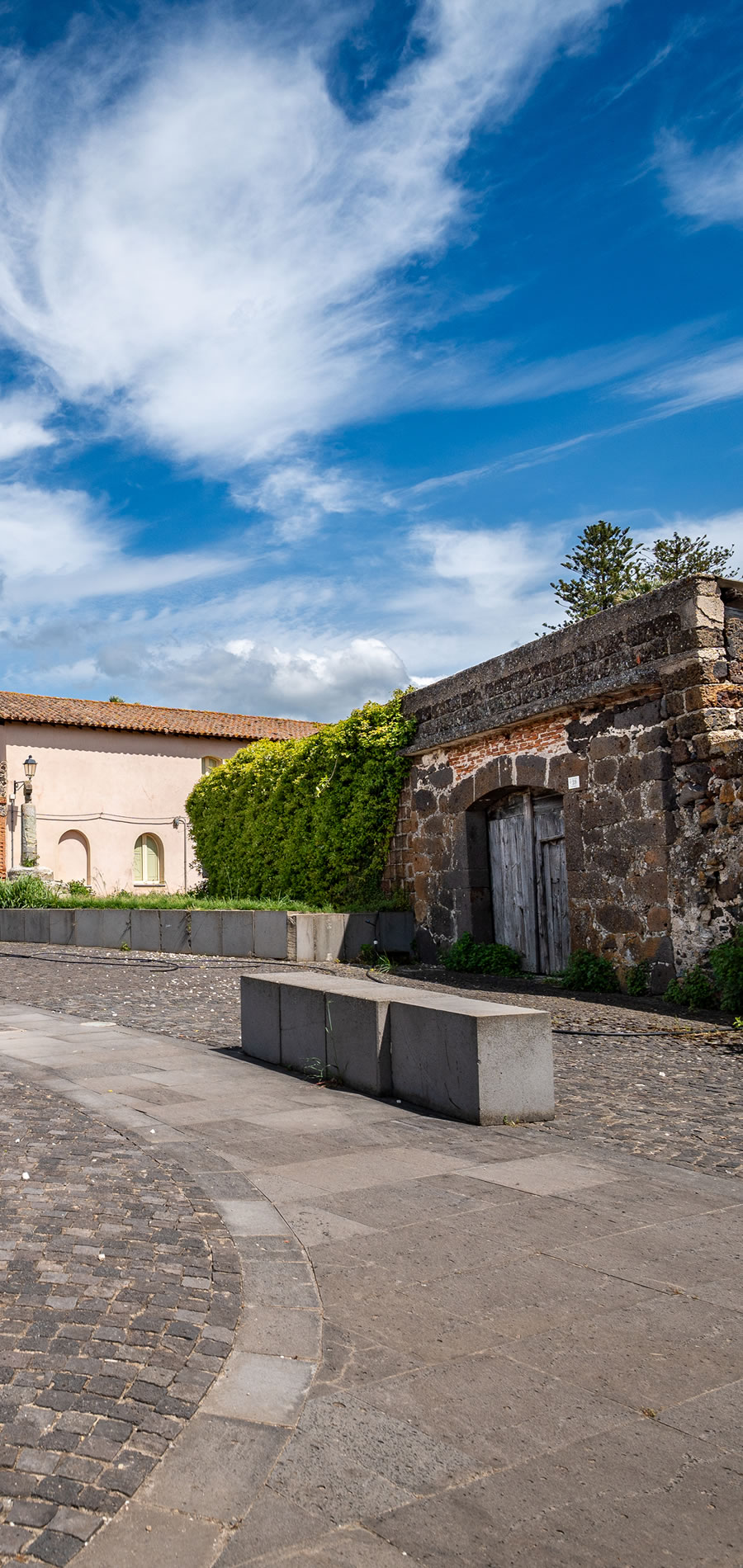
Walking through the historic center of Milis is like flipping through the pages of a story that weaves together stone, memory, and devotion. The village, founded in the 13th century, was the capital of the curatoria of Campidano di Milis in the Giudi “cate of Arborea, playing a significant role in the” medieval administrative organization of Sardinia. This importance is still reflected today in the “urban layout, in the architectural details, and in the” atmosphere that can be felt among its paved streets.
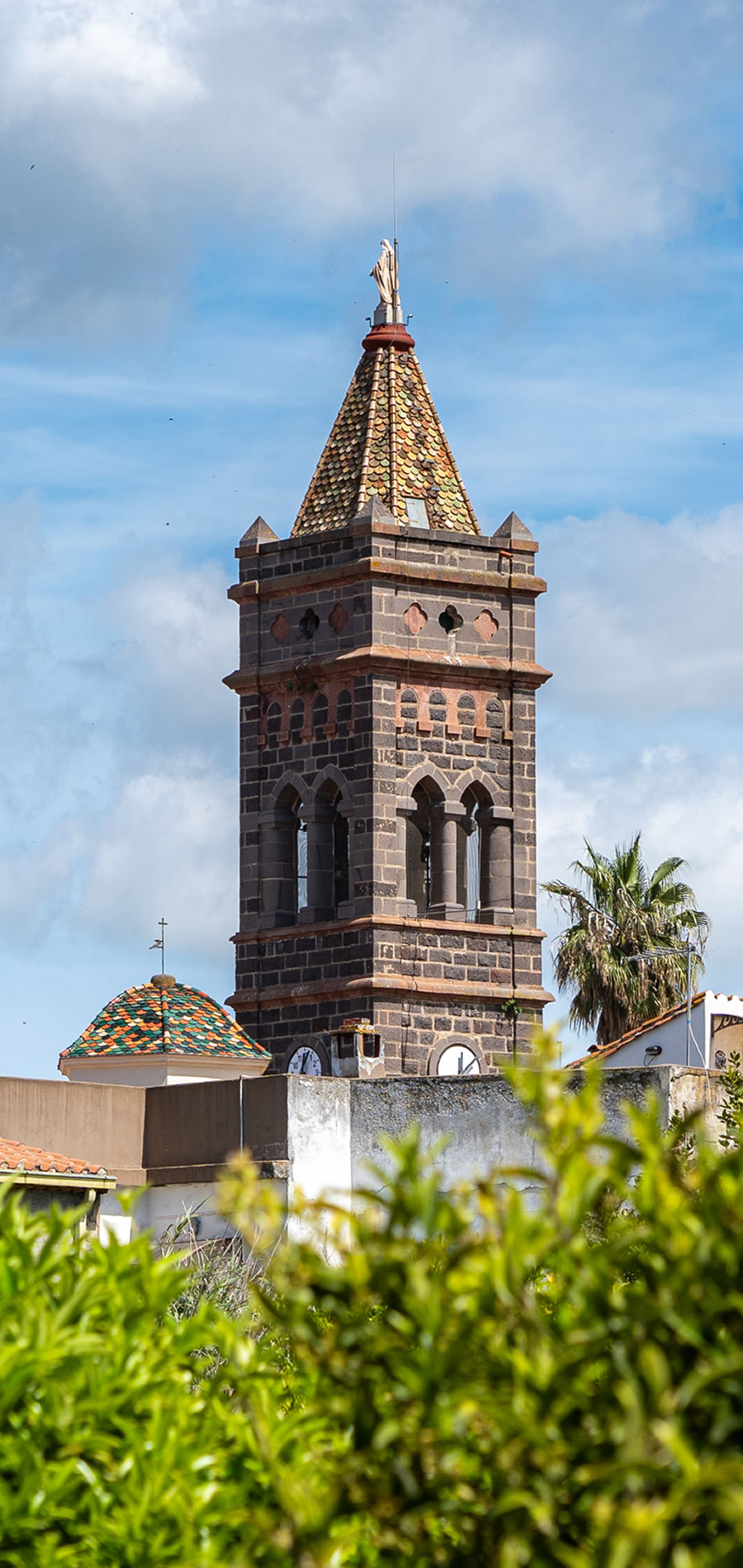
The houses in the center, built of dark basalt and adorned with sandstone portals, tell of a long building tradition, sober and elegant. Among the oldest streets, glimpses of inner courtyards, wooden loggias, and signs of an agricultural past that long coexisted with the village’s aristocratic identity open up. The beating heart of the center is Piazza Martiri, a place of meeting and community life, where historic buildings and the parish church of San Sebastiano face each other.
The church, built in the sixteenth century, is a fine example of Gothic-Catalan architecture. With its facade of local stone and slender lines, it houses “works of art of great value, including a wooden statue of the martyr saint and a seventeenth-century painting depicting Saint Sebastian. Every year, the place comes alive during Holy Week, when religious celebrations awaken the” deepest identity of the village. Among the most evocative moments: sa lattera, the descent of the statue of Jesus, and s“’incontru”, the reenactment of the encounter between the risen Christ and the Madonna on Easter Sunday.
Milis is also the guardian of an ancient agricultural tradition, carried on with care and dedication. Citrus fruits, cereals, and vernaccia are born from a generous land, cultivated since the Middle Ages thanks to “the work of the Camaldolese monks, who transformed the territory into a productive garden, as still evidenced today by the” area of s’Ortu de is Paras.
The historic center of Milis is, ultimately, an invitation to slow down: to discover, step by step, a village that has managed to preserve its identity by intertwining history, landscape, and community.
Boyl Palace
In the heart of the historic center of Milis, next to the parish church of San Sebastiano, stands one of the most representative buildings of inner Sardinia: Palazzo Boyl. More than a residence, it’s an architectural narrative that spans centuries, reflecting the prestige of two great families and the change of an entire community.
Its origins likely date back to the 14th century, when a Camaldolese monastery existed on the site. Some medieval traces, still visible in the rear part, testify to the building’s first life. From the 1300s onwards, the palace became a noble residence and in the 1600s it was completely rebuilt, incorporating the ancient structure into a new architectural layout.
For centuries it belonged to the Vacca family, until, at the end of the 18th century, it became part of the Boyl family’s heritage thanks to the marriage between Maddalena Vacca Salazar and Marquis Vittorio Boyl of Putifigari, a military engineer. It was he, together with his brother Carlo, who promoted a radical expansion and restoration, inspired by Piedmontese neoclassical taste.
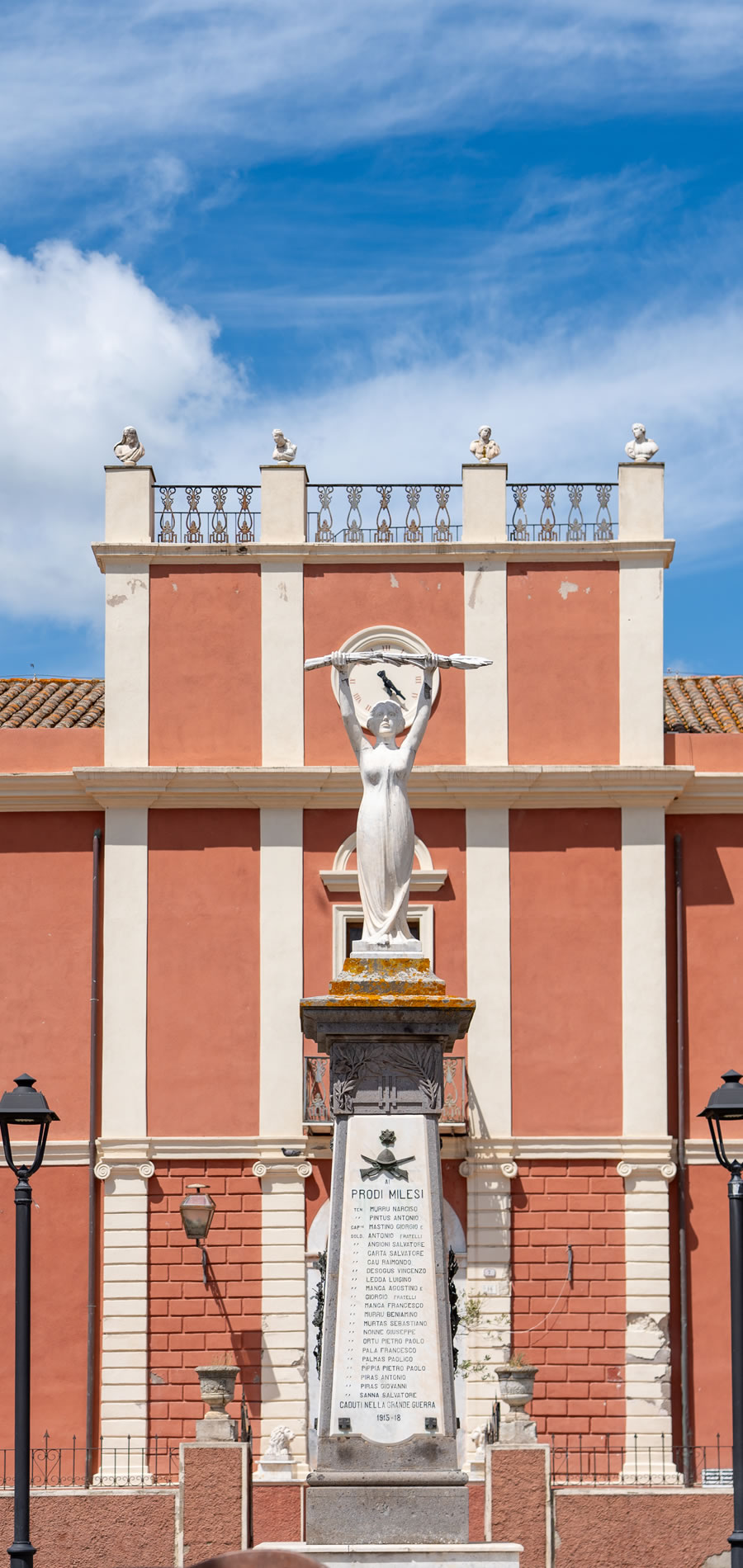
The façade, in Pompeian red, stands out for its balance and refinement: four flat columns with Ionic capitals frame the central body, where wrought iron balconies open, a large white clock and four marble busts representing the seasons. “Inside, the spacious rooms preserve stuccos, mosaics and furnishings that reflect the” sober elegance of 19th-century nobility.
Today, the upper floor houses the Museum of Sardinian Costume and Jewelry, a unique collection of clothes, textiles, and ornaments that tells the story of the island’s rich traditions. The inner courtyard hosts a small amphitheater, a venue for cultural events and concerts.
Within these walls, illustrious figures have stayed: King Carlo Felice, Carlo Alberto, Alberto La Marmora, Grazia Deledda, D’Annunzio, Honoré de Balzac and Antoine Claude Pasquin known as “Valery”, who in 1837 compared the citrus groves of Milis to the gardens of the Hesperides.
Today, Palazzo Boyl continues to live as a place of memory, art, and shared beauty.
Villafior Forest
Crossing the stone portal that marks its “entrance, one immediately has the sensation of entering a place out of time: the Villaflor Forest, known as”S’Ortu de is Paras, is much more than a simple citrus grove. It’s a living fragment of Milis’ history, where nature, spirituality, and memory intertwine among the orange tree fronds and shady paths.
The Sardinian name S’Ortu de is Paras means “the ‘friars’ orchard’ and recalls the presence of the Camaldolese monks of Bonarcado, who in the 12th century started one of the first citrus cultivations on the” island. The friars transformed the land into a productive garden, where agricultural wisdom combined with spirituality and respect for the landscape.
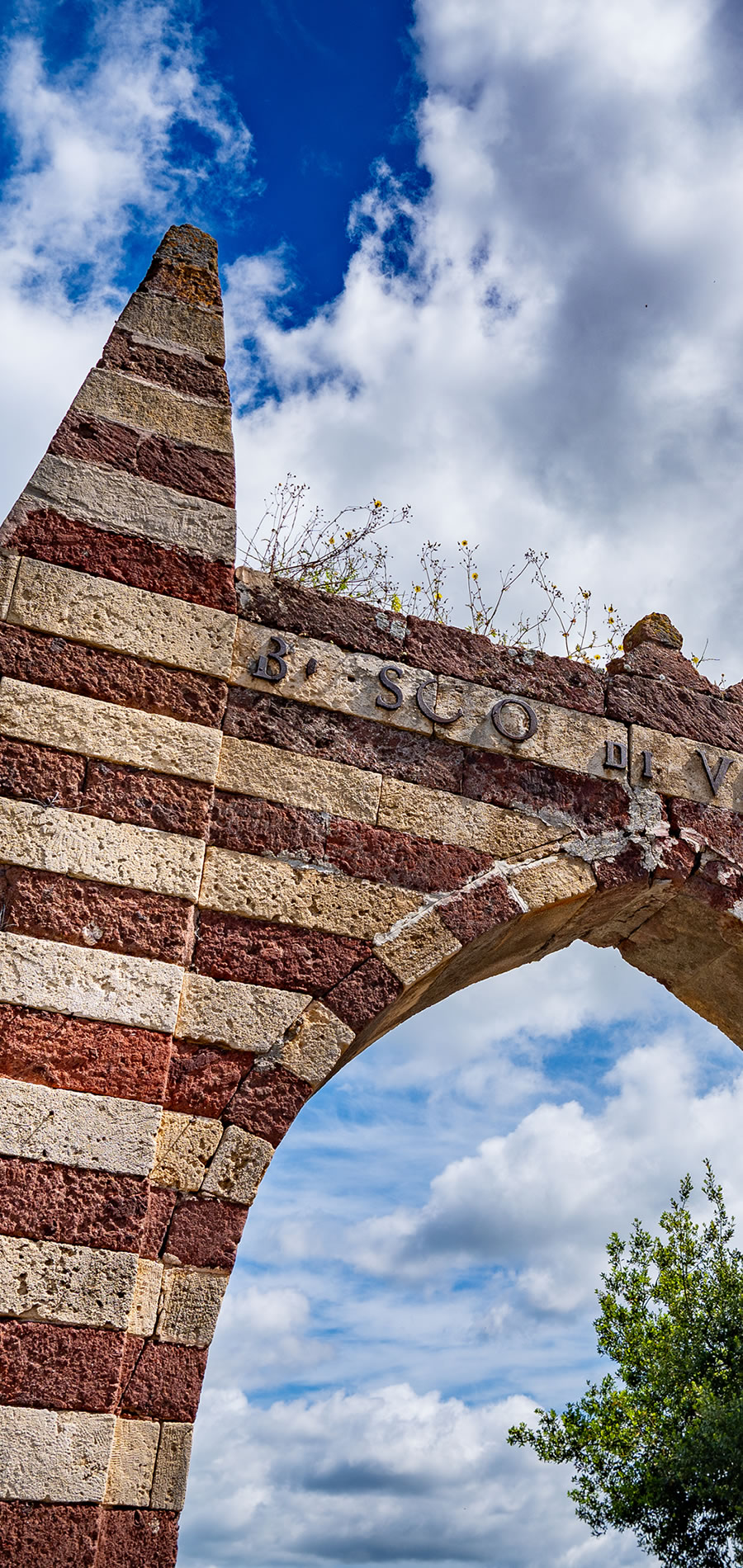
In the 19th century, the garden passed to the Pilo Boyl family, who renamed it Bosco di Villaflor and enhanced its “entrance with the construction of a monumental portal in Catalan Gothic style. Made of red trachyte and Sinis sandstone, the portal strikes with its pointed arch, spires, and crenellated crown, reminiscent of medieval castles. A symbolic and concrete threshold that opens to a world where nature is the protagonist and history lives in the silence of the leaves.”
The forest has fascinated travelers and illustrious personalities over the centuries: King Carlo Alberto walked there in 1829, Gabriele “D’Annunzio sang of its beauty, the writer Valéry defined it as the ‘Garden of the Hesperides’, and the naturalist Alberto La Marmora documented its extraordinary vegetative richness. Famous is the” centuries-old orange tree that, it is said, two men could not embrace.
Today, the Villaflor Forest is a place to be experienced slowly, among citrus scents and suspended memories. A corner of Sardinia that continues to enchant those who pass through it, with the timeless charm of legendary gardens.
Church of San Paolo
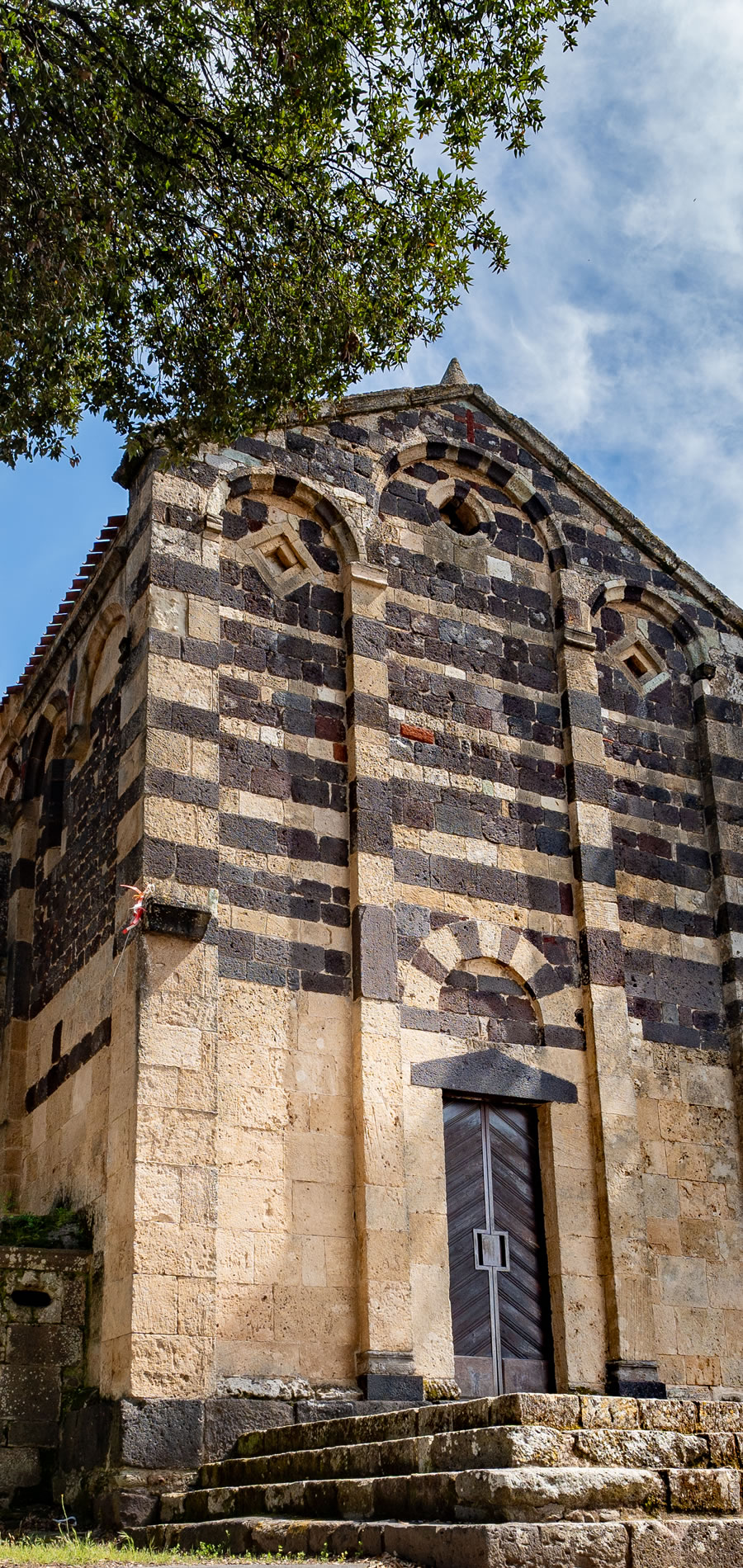
In the agricultural plain of Milis, among the citrus groves that shape its landscape, stands the Church of San Paolo: a small masterpiece of “Romanesque island architecture, which strikes at first glance with its two-tone stone façade. The alternating horizontal bands of light limestone and dark basalt create an elegant play of contrasts, making the” building immediately recognizable and in perfect harmony with the sobriety of the rural landscape.
Built between the 12th and 13th centuries, probably by the Camaldolese monks active in the area, the church is one of the oldest religious buildings in the territory. It stands next to the Milis cemetery, along the “ancient route that connected the centers of the Campidano of Oristano. The Romanesque style, with its sober monumentality, reflects an” era in which stability, protection, and spirituality were sought in stone. Every architectural element is designed to last and convey a sense of order and sacredness.
The commissa cross plan — with three naves and a well-defined transept — guides the visitor into a harmonious and intimate space. The interior, also built with local materials such as limestone, tuff, and basalt, emanates an atmosphere of sober tranquility, reinforced by the dim light filtering through small openings. The round arches, pilasters, and simple yet proportionate capitals contribute to creating a sense of balance and protection.
The main portal, architraved and decorated with floral and symbolic motifs, introduces a space that, despite its essentiality, still preserves frescoes and paintings dedicated to Saint Paul. Some details suggest that various craftsmen participated in its construction, active in subsequent eras and capable of integrating different elements into a harmonious whole.
Today, the Church of San Paolo is a quiet and intimate place, where faith, memory, and landscape meet. A building that has not lost its function as the spiritual guardian of the community and that continues, centuries after its foundation, to speak the timeless language of stone.
Ancient center of upper Oristanese, in west-central Sardinia, famous for its agri-food excellences, the territory of Milis is dotted with historic buildings and surrounded by landscapes of great beauty